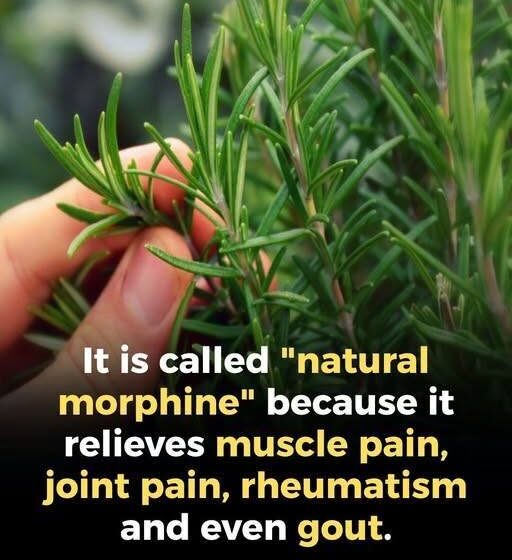
Rosemary is much more than a flavorful kitchen herb. Traditionally used in Mediterranean herbal medicine, this aromatic plant contains compounds with antioxidant and anti-inflammatory properties—but calling it “natural morphine” is misleading.
The image circulating online claims that rosemary can relieve muscle pain, joint pain, rheumatism, and gout, describing it as “natural morphine.” While rosemary does have a long history of traditional medicinal use and laboratory research has found potentially useful anti-inflammatory and pain-modulating effects, there is no good evidence that rosemary is equivalent to morphine or that it can treat gout or serious joint disease on its own.
That distinction is important. Natural does not automatically mean harmless, and promising laboratory findings do not necessarily translate into a proven treatment in humans.
What Is Rosemary?
Rosemary, scientifically known as Salvia rosmarinus (formerly Rosmarinus officinalis), is an aromatic evergreen herb belonging to the mint family.
It is widely used in cooking, particularly in Mediterranean cuisine, where the fresh or dried leaves are used to flavor:
- Meat
- Chicken
- Fish
- Potatoes
- Vegetables
- Soups
- Sauces
- Breads
- Herbal teas
Rosemary has also been used traditionally in herbal medicine for digestive complaints, headaches, muscle discomfort, and other conditions. Scientific reviews have identified several potentially biologically active compounds in rosemary, including rosmarinic acid, carnosic acid, carnosol, and various volatile oils.
Why Is Rosemary Called “Natural Morphine”?
The phrase “natural morphine” is primarily a social-media description, not a scientific classification.
Morphine is a potent opioid medication that acts on opioid receptors in the nervous system and is used medically for significant pain. Rosemary does not contain morphine and does not act as a natural replacement for prescription opioid medications.
What probably led to the claim is research suggesting that certain rosemary compounds can influence pain and inflammation.
For example, laboratory and animal studies have reported antinociceptive—the scientific term for reducing pain-related responses—and anti-inflammatory effects from rosemary extracts and individual rosemary compounds.
So a more accurate description would be:
Rosemary contains compounds that show potential anti-inflammatory and pain-modulating activity.
That is very different from saying it is “natural morphine.”
Rosemary and Muscle Pain
Muscle soreness can result from exercise, overuse, minor injuries, prolonged physical activity, or inflammation.
Rosemary has attracted interest because several of its compounds have demonstrated biological activities associated with inflammation and oxidative stress.
Rosmarinic acid, for example, has been studied for its antioxidant and anti-inflammatory properties. Reviews describe rosemary and its constituents as having potential effects on inflammatory pathways and pain-related processes.
However, most of the strongest evidence for rosemary’s pain-relieving mechanisms comes from laboratory and animal research, rather than large clinical trials specifically testing rosemary for ordinary muscle pain.
That means rosemary may be interesting as a complementary traditional herb, but it should not be presented as a proven treatment for significant or persistent muscle pain.
Can Rosemary Help Joint Pain?
This is another area where the scientific evidence is interesting but should be interpreted carefully.
Rosemary contains compounds with antioxidant and anti-inflammatory activity, and inflammation plays an important role in many painful musculoskeletal conditions.
A 2023 randomized clinical trial examined a standardized supplement containing curcuma phospholipid, rosemary extract, resveratrol, and vitamin C in people with knee osteoarthritis. The supplement group experienced improvements in pain, physical function, quality of life, and inflammatory markers compared with the control group.
But there is an important limitation:
The study tested a combination of ingredients, not rosemary alone.
Therefore, it cannot tell us exactly how much of the observed benefit came from rosemary.
Earlier research has also investigated products containing rosemary extract together with other ingredients for rheumatic conditions. One small pilot study of a combination containing rosemary extract, reduced iso-alpha acids, and oleanolic acid reported improvements in pain among people with arthritis, but again, it was not a test of rosemary by itself.
What About Rosemary Oil?
Rosemary essential oil is sometimes used in massage preparations.
A massage itself can temporarily make muscles feel more comfortable by promoting relaxation and reducing the perception of discomfort. However, that does not prove that rosemary oil is a powerful analgesic.
Research on topical herbal treatments for musculoskeletal pain is mixed, and evidence for specific herbal products varies considerably.
A 2026 systematic review of topical herbal oils for knee osteoarthritis found overall improvements in pain, stiffness, and function across the herbal-oil studies included, but the research involved multiple different oils and formulations rather than establishing rosemary oil as a stand-alone treatment.
What About Rheumatism?
“Rheumatism” is an older, broad term that can refer to many different types of joint and muscle problems.
Today, doctors distinguish between conditions such as:
- Osteoarthritis
- Rheumatoid arthritis
- Gout
- Tendinitis
- Bursitis
- Fibromyalgia
- Inflammatory arthritis
- Muscle injuries
These conditions have different causes and treatments.
Rosemary may have compounds with anti-inflammatory properties, but there is not enough clinical evidence to recommend rosemary as a treatment for rheumatoid arthritis or other inflammatory autoimmune diseases.
Anyone experiencing persistent swollen, painful, or stiff joints should have the underlying cause properly evaluated.
Can Rosemary Treat Gout?
This is where the viral claim becomes particularly misleading.
There is not sufficient clinical evidence showing that rosemary can treat a gout attack or reliably lower uric acid levels in people with gout.
Gout occurs when uric acid crystals accumulate in a joint, producing intense inflammation and pain.
During an acute gout attack, appropriate medical treatment can be important because untreated attacks can be extremely painful and recurrent gout can lead to joint damage and other complications.
Rosemary should not replace prescribed gout treatment.
If someone has sudden severe pain, swelling, redness, and warmth—particularly in the big toe, ankle, or another joint—they should not assume the problem is simply “inflammation” that can be treated with an herb.
The Compounds That Make Rosemary Interesting
Scientists have identified several compounds in rosemary that may contribute to its biological effects.
Rosmarinic Acid
Rosmarinic acid is a polyphenolic compound found in several herbs, including rosemary.
It has demonstrated antioxidant and anti-inflammatory activity in experimental research.
Carnosic Acid
Carnosic acid is another important rosemary constituent that has attracted scientific interest because of its antioxidant and cellular effects.
Carnosol
Carnosol is a phenolic diterpene found in rosemary and has also been investigated for antioxidant and anti-inflammatory properties.
Essential Oil Components
Rosemary essential oil contains volatile compounds such as 1,8-cineole, camphor, and α-pinene, although the exact composition can vary according to the plant, growing conditions, extraction method, and preparation.
These compounds help explain why rosemary is scientifically interesting—but they do not mean that eating rosemary or drinking rosemary tea produces the same effects as purified compounds used in laboratory experiments.
What Does the Research Actually Show?
The scientific evidence can be divided into several levels.
Laboratory studies
Research on isolated rosemary compounds suggests antioxidant, anti-inflammatory, and pain-modulating effects.
Animal studies
Animal experiments have also reported antinociceptive and anti-inflammatory activity from rosemary extracts and certain rosemary constituents.
Human studies
There are fewer high-quality clinical studies specifically testing rosemary alone for pain.
Some human research has involved combination supplements containing rosemary, making it difficult to determine the specific contribution of rosemary.
Therefore, the evidence is promising but insufficient to call rosemary a proven painkiller.
How Can Rosemary Be Used Safely?
For most people, using rosemary as a culinary herb is generally straightforward.
You can add fresh or dried rosemary to:
- Roasted potatoes
- Chicken
- Fish
- Soups
- Vegetables
- Beans
- Homemade bread
- Marinades
- Sauces
For topical use, rosemary essential oil should never be applied undiluted directly to large areas of skin.
Essential oils are highly concentrated and can cause irritation or allergic reactions.
A carrier oil such as coconut, jojoba, or olive oil is commonly used to dilute essential oils before topical application.
Always perform a small skin test first if you are prone to reactions.
Rosemary Tea: Is It a Pain Remedy?
Rosemary tea is sometimes promoted online as a natural remedy for inflammation, headaches, digestive problems, and joint discomfort.
While rosemary contains biologically active compounds, there is insufficient evidence to conclude that a cup of rosemary tea will produce a clinically meaningful pain-relieving effect comparable to medication.
If you enjoy rosemary tea, it can be part of a normal diet, but it should not be considered a replacement for medical treatment.
Rosemary Safety and Precautions
“Natural” does not automatically mean risk-free.
Rosemary consumed in normal culinary amounts is very different from taking concentrated extracts or essential oil.
Large medicinal amounts and undiluted rosemary oil can cause adverse effects. Reported concerns include gastrointestinal symptoms, skin reactions, and interactions with certain medications.
Extra caution is appropriate for people who:
- Are pregnant or breastfeeding
- Take blood-thinning or antiplatelet medications
- Have a bleeding disorder
- Have a seizure disorder
- Have an aspirin allergy
- Take multiple prescription medications
- Are considering concentrated rosemary supplements
Rosemary may interact with medications that affect blood clotting, and medicinal amounts during pregnancy may not be safe.
If you take regular medication, talk with a doctor or pharmacist before using concentrated rosemary supplements.
Rosemary vs. Proven Pain Treatments
It is useful to put the evidence into perspective.
For conditions such as osteoarthritis, clinical evidence supports certain established treatments, including appropriately selected topical or oral medications, physical activity, exercise therapy, weight management when appropriate, and other interventions depending on the individual.
For example, systematic reviews have found that topical NSAIDs can provide meaningful pain relief for osteoarthritis, with diclofenac among the better-supported topical options.
That doesn’t mean everyone should use an NSAID. It means that treatments should be chosen according to the actual diagnosis and the person’s health history.
Rosemary may potentially have a role as a complementary herb, but it shouldn’t be promoted as an alternative to evidence-based treatment.
Simple Ways to Add More Rosemary to Your Diet
You don’t need a concentrated supplement to enjoy rosemary.
Rosemary Roasted Potatoes
Toss potatoes with olive oil, chopped rosemary, garlic, salt, and pepper before roasting until golden.
Rosemary Chicken
Add fresh rosemary, garlic, lemon juice, olive oil, and black pepper to chicken before cooking.
Rosemary Vegetable Roast
Combine rosemary with carrots, onions, zucchini, peppers, or squash.
Rosemary and Lemon Fish
A little rosemary, lemon, olive oil, and garlic can add excellent flavor to baked fish.
These culinary uses provide rosemary as part of a normal balanced diet without relying on concentrated medicinal doses.
Frequently Asked Questions
Is rosemary really “natural morphine”?
No. Rosemary does not contain morphine and is not a natural form of morphine. The phrase is a misleading nickname used in social-media posts.
Does rosemary relieve pain?
Some rosemary compounds have demonstrated pain-modulating and anti-inflammatory effects in laboratory and animal studies. Human evidence is much more limited, so rosemary should not be considered a proven analgesic.
Can rosemary cure arthritis?
There is no good evidence that rosemary cures arthritis. Some research involving rosemary-containing supplements has reported improvements in pain and function, but those products contained other active ingredients as well.
Can rosemary cure gout?
There is insufficient evidence that rosemary treats gout or reliably lowers uric acid. Gout should be diagnosed and treated appropriately.
Can I massage with rosemary oil?
Diluted rosemary essential oil can be used topically by some people, but concentrated essential oil should not be applied directly to the skin. Stop using it if irritation or an allergic reaction develops.
Is rosemary safe to eat?
For most people, rosemary used in ordinary culinary quantities is generally considered safe. Concentrated supplements and essential oils require considerably more caution.
The Bottom Line
Rosemary is an impressive medicinal plant with a long history of traditional use and a growing body of scientific research.
Its compounds—including rosmarinic acid, carnosic acid, and carnosol—have demonstrated antioxidant, anti-inflammatory, and pain-related effects in experimental research.
However, the viral claim that rosemary is “natural morphine” is not scientifically accurate.
Rosemary is not morphine, does not contain morphine, and should not be used as a substitute for prescribed pain medication or treatment for gout, arthritis, or other significant medical conditions.
A better way to describe it is:
Rosemary is a flavorful medicinal herb with promising anti-inflammatory and pain-modulating properties that are still being investigated.
Enjoy it in your cooking, use concentrated preparations cautiously, and seek medical advice when pain is severe, persistent, swollen, unexplained, or accompanied by other concerning symptoms.