6
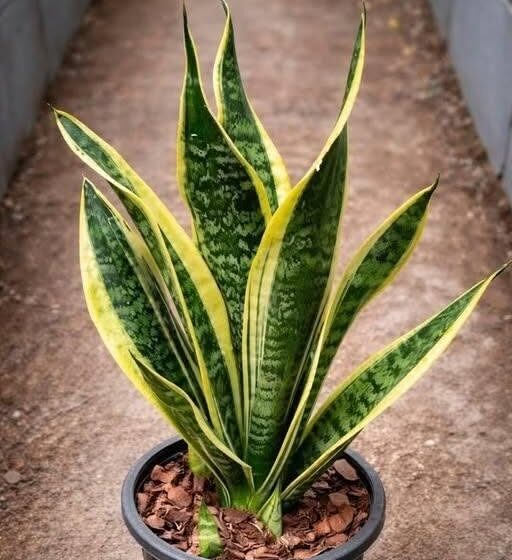
The snake plant, commonly known as Sansevieria and now classified in the genus Dracaena, is one of the most popular indoor plants. Its tall, upright leaves and ability to tolerate neglect make it an excellent choice for beginners.
Beyond its attractive appearance, snake plants have several practical benefits. They can contribute to indoor greenery, are relatively easy to maintain, and use a type of photosynthesis that allows them to continue exchanging gases at night.
🌿 1. May Help Improve Indoor Air Quality
Snake plants are often promoted as air-purifying plants. Some laboratory research has shown that certain houseplants can remove particular volatile organic compounds (VOCs) from enclosed air under experimental conditions.
However, it’s important not to overstate this benefit. A few plants in a normal home are not a substitute for ventilation or an air purifier. Real-world homes have much larger air volumes and air exchange than the laboratory conditions used in many plant studies.
Still, adding plants to your home can make your indoor environment feel fresher and more pleasant.
🌙 2. It Can Perform Gas Exchange at Night
One interesting characteristic of snake plants is that they use Crassulacean acid metabolism (CAM).
Unlike many plants, CAM plants can open their stomata at night to take in carbon dioxide and reduce water loss during the day.
This is one reason snake plants are often considered suitable for bedrooms. However, the amount of oxygen produced by a houseplant is relatively small, so you shouldn’t expect a snake plant to significantly change the oxygen concentration of a bedroom.
💧 3. Requires Very Little Water
One of the biggest advantages of a snake plant is its ability to tolerate periods of dryness.
Its thick leaves and specialized physiology allow it to store and conserve water, making it much less demanding than many tropical houseplants.
This makes it particularly useful for people who sometimes forget to water their plants.
In fact, overwatering is generally a bigger concern than underwatering.
☀️ 4. Tolerates a Range of Light Conditions
Snake plants are remarkably adaptable.
They can grow in:
- Bright indirect light
- Moderate indoor light
- Lower-light locations
However, “low light tolerant” doesn’t mean “no light.” A snake plant will generally grow more slowly in darker areas.
For stronger growth, place it somewhere with bright, indirect light.
🪴 5. Great for Beginners
If you’re new to houseplants, snake plants are an excellent starting point.
They don’t require complicated care routines and can tolerate occasional missed waterings.
They’re also relatively forgiving when compared with plants that require consistently moist soil or high humidity.
A simple routine of checking the soil before watering is usually enough.
🏠 6. Adds Natural Beauty to Your Home
Snake plants have a distinctive architectural appearance.
Their upright leaves can add height and structure to:
- Bedrooms
- Living rooms
- Offices
- Hallways
- Entryways
- Bathrooms with adequate light
They work particularly well with modern, minimalist, and contemporary interior styles.
🌱 7. Can Live for Many Years With Proper Care
Snake plants can be remarkably long-lived when they’re kept in appropriate conditions.
The key is avoiding the most common mistake: too much water.
Use a pot with drainage holes and allow the soil to dry substantially between waterings.
🌵 8. They’re Relatively Drought-Tolerant
Because snake plants store water in their leaves and roots, they can withstand periods without watering.
This makes them particularly useful for people who travel or have busy schedules.
A good rule is:
Check the soil before watering rather than watering according to a fixed calendar.
If the soil is still damp several centimeters below the surface, wait.
🧹 9. May Help Create a More Pleasant Indoor Environment
Plants can contribute to the psychological and aesthetic quality of indoor spaces. Having greenery around you can make a room feel more comfortable and connected to nature.
Even when the direct air-cleaning effect of a houseplant is limited, its visual and environmental value can still make it worthwhile.
💚 10. Easy to Propagate
Another fun benefit is that snake plants can be propagated relatively easily.
Depending on the variety, you can propagate them through:
- Leaf cuttings
- Division of the plant
- Separating pups that grow around the parent plant
Division is often particularly straightforward because new shoots naturally emerge from the plant’s underground rhizomes.
⚠️ Are Snake Plants Safe for Pets?
This is an important consideration if you have cats or dogs.
Snake plants can be toxic if eaten by pets. They contain compounds that may cause gastrointestinal irritation, including symptoms such as nausea, vomiting, or diarrhea.
Keep snake plants somewhere pets cannot chew on them. If you believe a pet has eaten part of the plant and is showing symptoms, contact a veterinarian.
💧 How to Care for a Snake Plant
Snake plants are easy to care for, but a few basic rules make a big difference.
Water
Allow the soil to dry out significantly between waterings.
During the growing season, this might mean watering every couple of weeks, while in cooler or lower-light conditions it may need considerably less.
Don’t follow a strict schedule—check the soil first.
Light
Bright, indirect light is ideal, although snake plants can tolerate lower-light areas.
Avoid suddenly placing a plant that has been in low light under intense direct sunlight, as the leaves can develop sun damage.
Soil
Use a well-draining potting mix.
A cactus or succulent-style mix can work well because it reduces the risk of water remaining around the roots.
Pot
Always choose a container with drainage holes.
This is especially important because standing water can lead to root problems.
🌿 Final Thoughts
The snake plant is popular for good reason. It’s attractive, adaptable, drought-tolerant, relatively easy to care for, and capable of thriving in a variety of indoor environments.
Although claims that snake plants dramatically purify household air or substantially increase bedroom oxygen are often exaggerated, they’re still wonderful plants to have around the home.
Give your snake plant good drainage, don’t overwater it, and provide appropriate light—and it can reward you with years of beautiful, low-maintenance greenery.

